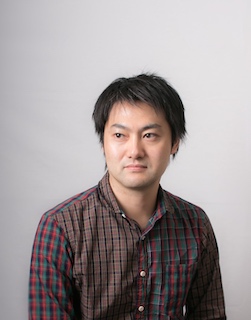
biscuit gallery karuizawa is pleased to announce a solo exhibition by Ryo Shinagawa, starting Saturday, July 6, 2024, in celebration of the gallery’s first anniversary.
[biscuit gallery karuizawa 1st Anniversary] Ryo Shinagawa Solo Exhibition “Hello-Goodbye” / “Hello Again (Naturally)”
biscuit gallery karuizawa is pleased to announce a solo exhibition by Ryo Shinagawa, starting Saturday, July 6, 2024, in celebration of the gallery’s first anniversary. biscuit gallery karuizawa, which opened in July 2023, is about to mark its first year…
On the opening day, Saturday, July 6, 2024, we will hold a special talk event to commemorate the exhibition.
As Ryo Shinagawa’s conversation partner, we have invited Tadashi Kobayashi, a renowned Japanese art historian (also widely known as “Kobachu-sensei”), to speak in depth about Japanese art and painting from the ukiyo-e era to the present. Teiya Iwabuchi, editor-in-chief of Bijutsu Techo, has kindly agreed to serve as the moderator.
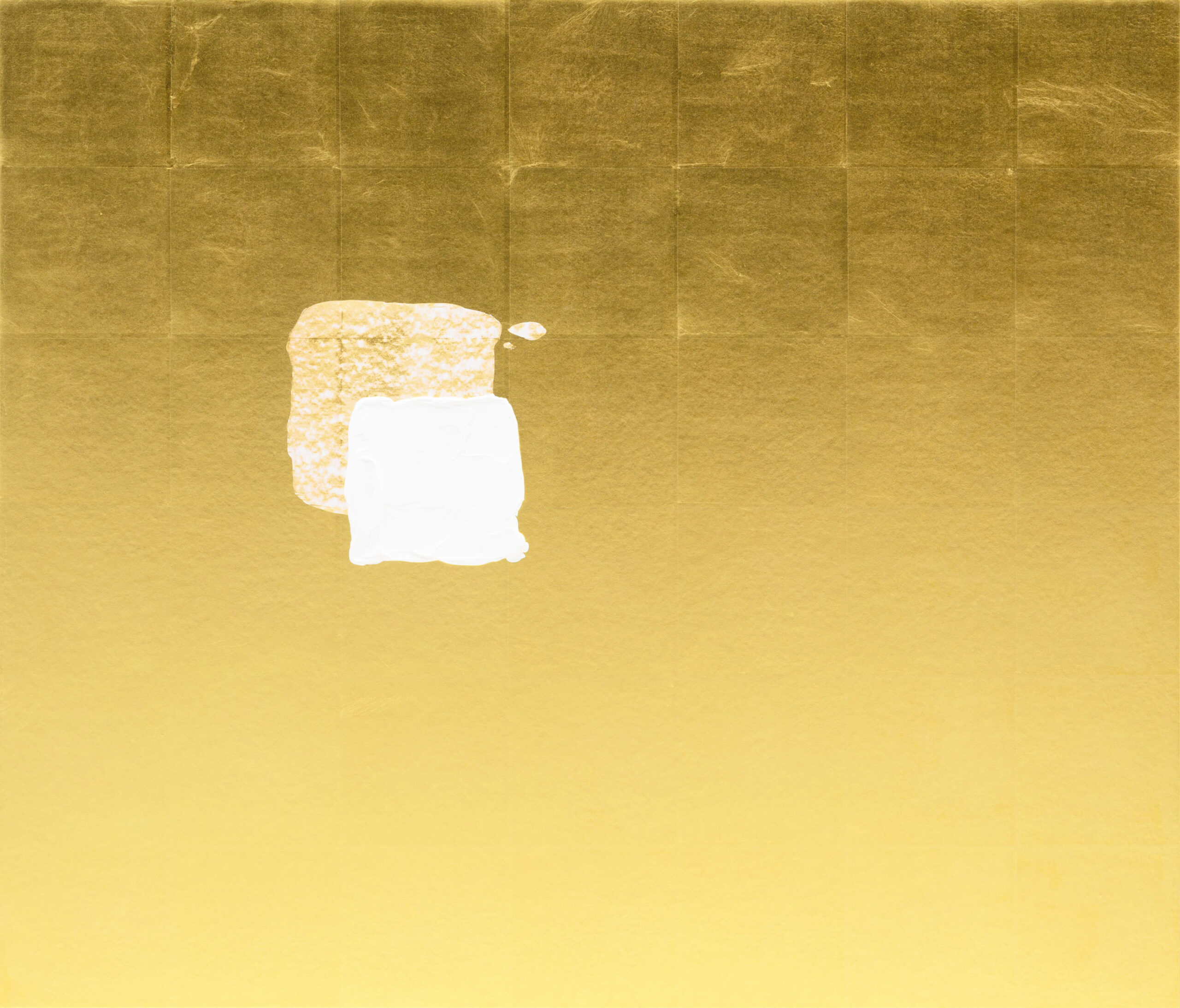
Main visual for the first half of the Ryo Shinagawa Solo Exhibition, “Hello-Goodbye”
A recording of the talk is available below.
biscuit gallery karuizawa 1st Anniversary: Ryo Shinagawa Solo Exhibition — Special Talk Event
Speakers:
• Ryo Shinagawa (artist)
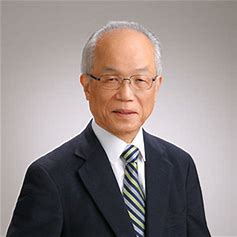
• Tadashi Kobayashi (Japanese art historian, Director of the Okada Museum of Art)
• Teiya Iwabuchi (Editor-in-chief, Bijutsu Techo; moderator)
Talk Overview
Taking on New Work
Iwabuchi: This time, at Shinagawa-san’s strong personal request, we are joined by Tadashi Kobayashi, a specialist in Japanese art history. In this new solo exhibition, “Hello Goodbye / Hello Again,” Shinagawa-san presents photographic and video works for the first time, which I am sure has surprised many. Shinagawa-san, could you start by telling us about the works?
Shinagawa: I usually paint mainly plants using traditional materials. But I do not want to keep painting only the same thing. As my environment changes, carefully asking myself “what do I want to paint now?” is, I believe, essential if I am to keep painting until I die. For this exhibition, I took on the things that are most burning inside me right now. My previous paintings and my new photographic and abstract works are like “different branches of a single tree.” The trunk is the same; one branch blossoms into flowers, another into photography — within me, all of them are consistent expressions of “Ryo Shinagawa.”
An Originary Experience in Italy
Shinagawa: I studied oil painting in high school and went to Italy at twenty, where I encountered Renaissance painting. But in search of a painting that felt more real to me, I began studying Nihonga (Japanese-style painting). In 2012, while assisting at the Venice Biennale, I was struck by the gap between the rules of “the Japanese painting I imagined” and those of “the global art world.” After returning to Japan, as I rediscovered the beauty of temple paintings and hanging scrolls, I began searching for ways to use materials that go back to the Edo period to create contemporary painting.
“Ma” and Depth, Inspired by Sanjusangen-do
Shinagawa: I consider what I paint and the background (such as gold leaf) to be entirely equal. Sanjusangen-do, for instance, takes its name from the thirty-three “ma” (intervals) created by its thirty-four columns. It is a way of thinking that lets the invisible exist. Japanese people have grasped this “ma” along a horizontal dimension; I wanted to express it instead along a vertical axis of “foreground and depth.” By applying paint, peeling it off before it dries, and applying it again — a sculptural process — I create a conceptual depth within a flat surface. I also cover the background with gold leaf across the entire picture plane so that viewers are reflected in it. By including the immediacy of the moment, and even the viewer’s own shadow, I want the painting to become a device into which they can immerse themselves and feel it as their own.
The Layer of “Certain Absence” in the Photographic Works
Shinagawa: The photographs in this show were made with the same approach as the paintings. I printed a film photograph at B2 size, stepped back one meter, and photographed it again — repeating that process ten times. The final single image contains, although not visibly, a definite “ma” of eleven meters of space and ten sheets of film. The motifs are lighthouses and the sea. The sea symbolizes a “partition” that separates things, playing a role similar to the columns of Sanjusangen-do. The title “Hello Goodbye” also refers to this partitioning of things.
Tadashi Kobayashi on the “Spirit of Edo” and Shinagawa’s Work
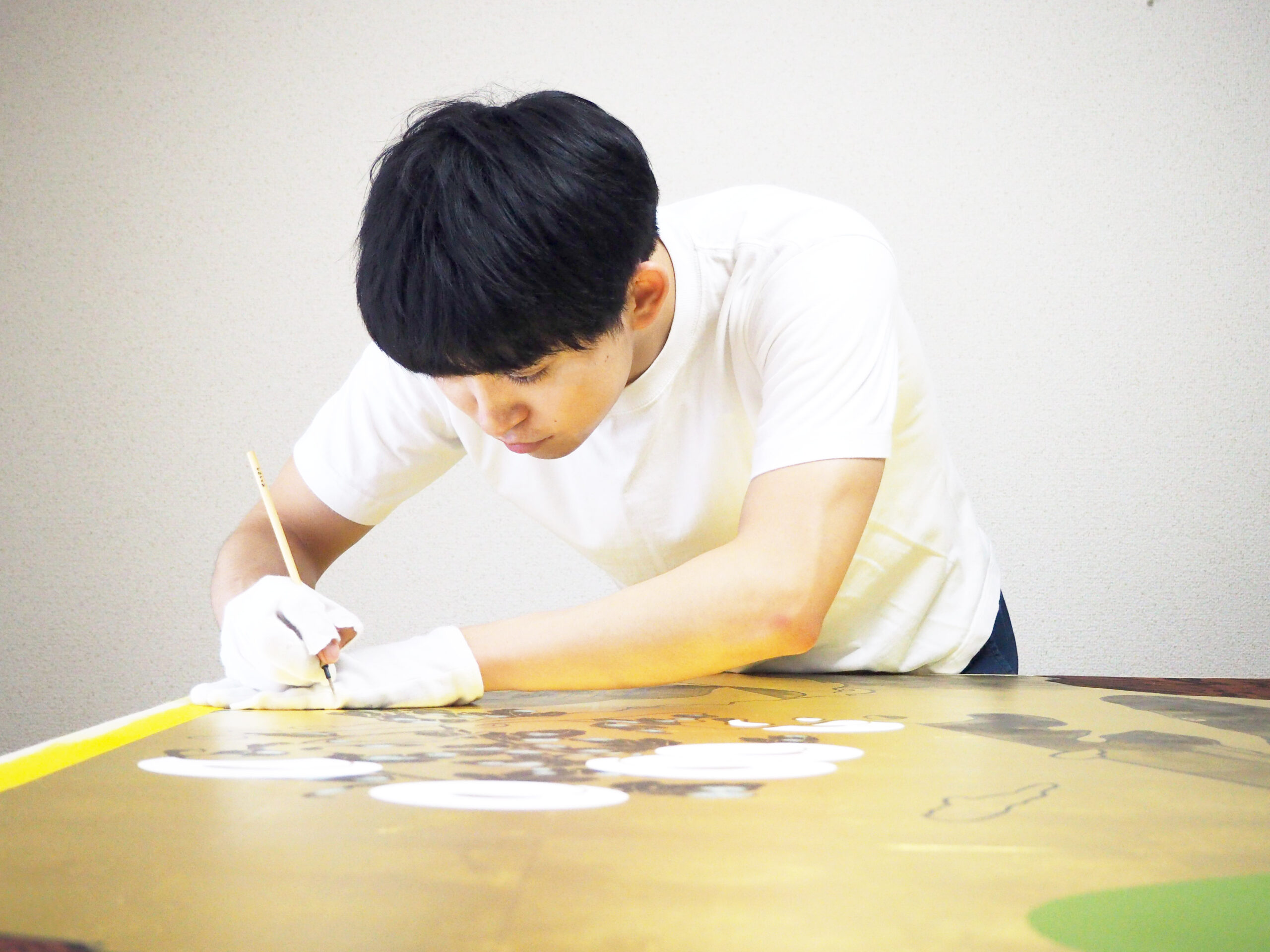
Kobayashi: The Edo period was a time when commoners without political power built a magnificent culture out of sheer passion. Yesterday, Shinagawa-san gave me a 30- to 40-minute art lecture on his iPad, and I felt that he is exactly like the painters of Edo — a person driven by an irresistible passion to express himself. What surprised me is that he does not leave the work to assistants: he applies the gold leaf himself, mixes his own mineral pigments, and takes full responsibility for the production. There is a fascination in his “must-touch” brushwork, which tries to express time differences and multiple dimensions within a flat surface. In the Edo period there were “art revolutionaries” like Tawaraya Sotatsu, who started out at a fan shop and was eventually recognized for his work. Shinagawa-san likewise — through going abroad, he became more conscious of “Japan,” which connects him to the great masters of Edo.
Replies to the Contemporary Context (Richter, Murakami)
Iwabuchi: Your work brings to mind Gerhard Richter’s layered structures. Are you conscious of that?
Shinagawa: I studied Richter, but I sometimes feel a certain “coldness” in his work, as if it is constructed to prove a point in art history. I want to aim instead for expression rooted in my own memories and attachments — something with “love.”
Questioner: What do you think of Takashi Murakami?
Shinagawa: I read his books like scripture and learned contemporary art through them. He strategically used the negative sides of Japan (defeat in the war, otaku culture), but I want to build a new kind of painting out of the “positive sides” — the beauty of gold leaf, the practical brilliance of hanging scrolls.
Seeking an Expression That Will Last 300 Years
Shinagawa: The phenomenon in the photographic works of having a bright center and dark edges arose unintentionally from stacking the half-frame camera ten times, but I find it deeply beautiful. I want to leave behind works that, 200 or 300 years from now, will be spoken of alongside Tawaraya Sotatsu and Ito Jakuchu — “Ryo Shinagawa is incredible too” — works that transcend their era. The “difficulty” of Japanese art is the breadth of its “play,” and that is its richness. I want to be the kind of person who can enjoy that “margin.”
Overview
Ryo Shinagawa Solo Exhibition — Special Talk Event
Artist: Ryo Shinagawa
Guest: Tadashi Kobayashi (Japanese art historian)
Moderator: Teiya Iwabuchi (Editor-in-chief, Bijutsu Techo)
* Honorifics omitted
Venue: biscuit gallery karuizawa
Date and time: Saturday, July 6, 2024, 11:00–11:45
Capacity: approximately 15 people (selected by lottery)
Speaker Profiles
Ryo Shinagawa
Painter. Born in 1987 in Osaka. Based in Kyoto. Re-examining the history of Eastern painting and culture, he works to expand the possibilities of new painting in the present. He actively engages with a wide range of expression, from traditional formats such as hanging scrolls and fusuma paintings to contemporary architectural spaces, while continually asking the question, “What is painting?”
His major solo exhibitions include “Re:Action” (Fukuda Art Museum Panorama Gallery, Kyoto), “RYO SHINAGAWA” (Eslite Gallery, Taipei), and “LANDSCAPE” (OIL by Bijutsu Techo Gallery, Tokyo). He has also produced works for temples and corporations including Ryosokuin (Kenninji Temple), Shorin-in (Mt. Tenrei), Tiger Corporation (Osaka), and Japan Airlines (Tokyo).
Born in Tokyo in 1941. Completed his master’s degree at the Graduate School of the University of Tokyo. He has held positions including curator in the Painting Section of the Tokyo National Museum, associate professor at Nagoya University, professor in the Faculty of Letters at Gakushuin University, and director of the Chiba City Museum of Art. He currently serves as Professor Emeritus at Gakushuin University, Director of the Okada Museum of Art, advisor to Kokka Sha, and Honorary President of the International Ukiyo-e Society. He has been awarded the Order of the Sacred Treasure, Gold Rays with Neck Ribbon.
Major publications include Edo Painting History (Suntory Prize for Social Sciences and Humanities), Reading Edo Ukiyo-e (Chikuma Shinsho), Ito Jakuchu (Shincho Japanese Art Library), A Complete History of Japanese Ink Painting (Kodansha Gakujutsu Bunko), and Korin Paints Fuji! (Shogakukan).
Moderator Profile
Teiya Iwabuchi
Editor-in-chief of Bijutsu Techo. Born in 1975. Graduated from the Faculty of Economics at Keio University in 1999. Became editor-in-chief in 2008 and has held his current post since 2019. He launched the web edition of Bijutsu Techo and the art e-commerce site “OIL by Bijutsu Techo.” He is also involved in the wider art scene through serving as a juror for open calls and appearing in numerous talk events.
Exhibition Details
biscuit gallery karuizawa 1st Anniversary Ryo Shinagawa Solo Exhibition — Special Talk Event
Date and time: Saturday, July 6, 2024, 11:00–11:45
Venue: biscuit gallery karuizawa
Capacity: approximately 15 people (selected by lottery)
Admission: Free
Organized by: biscuit gallery karuizawa
biscuit gallery karuizawa는 2024년 7월 6일(토)부터, 개관 1주년을 기념하여 시나가와 료(Ryo Shinagawa)의 개인전을 개최합니다.
biscuit gallery karuizawa는 2024년 7월 6일(토)부터, 개관 1주년을 기념하여 시나가와 료의 개인전을 개최합니다. 2023년 7월에 오픈한 biscuit gallery karuizawa는, 다가오는 202…
회기 첫날인 2024년 7월 6일(토), 개인전 개최 기념 토크 이벤트를 개최합니다.
시나가와 료의 대담 상대로, 일본미술사학자이자「고바추 선생님」으로도 친숙한 고바야시 다다시(小林忠) 선생을 초청하여, 우키요에부터 현대에 이르기까지 일본 미술, 일본 회화에 대해 충분히 이야기 나누어 주시기로 했습니다. 또한 본 이벤트의 모더레이터로서, 미술수첩 총편집장 이와부치 데이야(岩渕貞哉) 선생이 참여해 주시게 되었습니다.
신작에 대한 도전 이와부치: 이번에는 시나가와 작가의 간곡한 희망으로, 일본미술사가 전문이신 고바야시 다다시 선생님을 모셨습니다. 이번 신작 개인전「Hello Goodbye / Hello Again」에서는 첫 사진 작품과 영상 작품 등, 새로운 전개에 놀라신 분들이 많을 거라 생각합니다. 먼저 시나가와 작가께서 작품에 대해 말씀해 주시겠습니까.
시나가와: 저는 평소 전통적인 화재(畵材)를 사용해 주로 식물을 그리고 있습니다. 하지만 같은 것만을 계속 그리고 싶은 것은 아닙니다. 환경이 변화하는 가운데,「지금 내가 무엇을 그리고 싶은가」를 세심하게 생각하고 표현하는 것이, 죽을 때까지 그림을 그만두지 않기 위해 중요하다고 생각합니다. 이번 개인전에서는, 지금 제 안에서 가장 뜨거운 것에 도전했습니다. 지금까지의 회화와 이번 사진, 추상 표현은「하나의 나무에서 뻗어 나간 서로 다른 가지」와 같은 것입니다. 베이스는 같은 한 그루의 나무이지만, 어떤 가지에는 꽃이 피고, 어떤 가지는 사진이라는 식으로, 제 안에서는 모두가 일관된「시나가와 료」의 표현입니다.
이탈리아에서의 원체험
시나가와: 고등학교에서 유화를 배우고, 20세에 이탈리아로 건너가 르네상스 회화를 접했습니다만, 저에게 더 리얼리티가 있는 그림을 찾아, 일본화를 배우기 시작했습니다. 2012년 베네치아 비엔날레에서 어시스턴트로 일했을 때,「제가 생각하는 일본화」와「세계 아트」의 룰의 차이에 충격을 받았습니다. 일본으로 귀국하여, 사찰의 그림이나 족자의 훌륭함을 재인식하는 가운데, 에도시대까지의 화재를 사용하면서도 현대의 표현(컨템퍼러리 페인팅)이 가능한가에 대한 탐구를 시작했습니다.
산주산겐도(三十三間堂)에서 착상한「간(間)과 깊이」 시나가와: 저는 그리는 부분과 배경(금박 등)이 완전히 대등하다고 생각합니다.
예를 들어 산주산겐도는 34개의 기둥에 의해 만들어지는 33개의「간(間, 마)」을 이름으로 하고 있습니다. 보이지 않는 것을 존재하게 만드는 사고방식입니다. 일본인은 이「간(間)」을 가로의 차원으로 파악해 왔지만, 저는「앞과 뒤」라는 세로의 차원(깊이)으로 표현하고 싶다고 생각했습니다. 물감을 발라 마르기 전에 벗겨내고, 다시 칠하는 조각적인 프로세스를 통해, 평면 안에 개념적인 깊이를 만들어 내고 있습니다. 또한 배경에 금박을 전 화면에 붙이는 것은, 관람자를 비춰 들이기 위해서입니다. 그 순간의 임장감과 자신의 그림자를 포함시킴으로써, 회화를「내 일」로서 몰입할 수 있는 장치로 만들고 싶다고 생각하고 있습니다.
사진 작품에서의「확실한 부재」의 레이어
시나가와: 이번에 출품한 사진은, 회화와 같은 접근으로 만들고 있습니다. 필름으로 촬영한 사진을 B2 사이즈로 출력하여, 1미터 떨어져서 다시 촬영하는 프로세스를 10회 반복했습니다. 최종적인 한 장에는, 가시화되어 있지는 않지만, 11미터의 공간과 10장의 필름이라는「간(間)」이 확실히 존재하고 있습니다. 모티프는 등대와 바다입니다. 바다는 무언가를 가르는「칸막이」의 상징이며, 산주산겐도의 기둥과 같은 역할을 하고 있습니다. 제목「Hello Goodbye」도 이러한 사물의 칸막이를 의미합니다.
고바야시 다다시 선생이 말하는「에도의 정신」과 시나가와 작품
고바야시: 에도시대는, 권력을 갖지 않은 서민이 정열을 가지고 훌륭한 문화를 만든 시대입니다.
어제, 시나가와 작가로부터 iPad로 30〜40분이나 미술 강의를 받았습니다만, 그는 그야말로 에도의 화가들과 같이, 표현하고 싶어 견딜 수 없는 정열을 가진 사람이라고 느꼈습니다. 놀란 것은, 그가 어시스턴트에게 맡기지 않고, 스스로 금박을 붙이고, 암채(岩絵具)를 조정하며, 책임을 가지고 제작하고 있다는 점입니다. 그의「필촉(필의 흔적)」에는 평면 안에 시간차나 여러 차원을 표현하려는 재미가 있습니다.
에도시대에는 부채 가게에서 시작해 가치를 인정받은 다와라야 소타쓰(俵屋宗達)와 같은「아트의 혁명아」가 있었습니다. 시나가와 작가도, 해외에 갔던 것이 오히려「일본」을 의식하게 되는 계기가 되었다는 점에서, 에도의 거장들과 통하는 무언가가 있습니다.
현대 미술의 문맥(리히터, 무라카미 다카시)에 대한 응답
이와부치: 게르하르트 리히터의 레이어 구조를 연상시킵니다만, 의식하고 계십니까?
시나가와: 리히터는 공부했습니다만, 그의 작품에는 미술사를 증명하기 위한「차가움」을 느끼는 경우도 있습니다. 저는 좀 더 자신의 기억이나 애정 같은「사랑」이 있는 표현을 지향하고 싶다고 생각합니다.
질문자: 무라카미 다카시 작가에 대해서는 어떻게 생각하십니까?
시나가와: 그의 책은 바이블처럼 읽으며, 현대 미술을 배웠습니다. 그는 일본의 부정적인 측면(패전, 오타쿠 문화)을 전략적으로 사용했지만, 저는 금박의 아름다움이나 족자의 편리함과 같은「긍정적인 측면」에서 새로운 회화를 만들어 가고 싶다고 생각합니다.
300년 남는 표현을 추구하며
시나가와: 사진 작품의「가운데가 밝고 주변이 어두운」현상은, 하프 카메라를 10회 겹치는 가운데 의도치 않게 생긴 것이지만, 매우 아름답다고 느낍니다. 저는 200년 후, 300년 후에「다와라야 소타쓰, 이토 자쿠추, 그리고 시나가와 료도 대단하다」고 일컬어지는 작품을, 시대에 얽매이지 않고 남기고 싶습니다. 일본 미술의「알기 어려움」은「유희」의 폭이며, 풍요로움입니다. 그「여백」을 즐길 수 있는 인간이고 싶다고 생각하고 있습니다.
개요
시나가와 료 개인전 특별 토크 이벤트
작가: 시나가와 료
게스트: 고바야시 다다시 (일본미술사학자)
모더레이터: 이와부치 데이야 (미술수첩 총편집장)
※경칭 생략
장소: biscuit gallery karuizawa
일시: 2024년 7월 6일(토) 11:00 〜 11:45
참가 인원: 약 15명 ※추첨제
참가자 프로필
시나가와 료|Ryo Shinagawa
화가. 1987년 출생, 오사카부 출신.
교토를 거점으로 활동. 동양의 회화와 문화적인 역사를 재고하면서,현대에 있어서 새로운 회화의 가능성을 확장하는 것에 도전. 족자나 후스마에(襖絵) 등의 전통적인 양식부터 현대의 건축 공간까지,폭넓은 표현을 만들어 내는 작업에 적극적으로 임하면서「회화란 무엇인가」를 묻고 있다.
주요 개인전으로「Re:Action」(후쿠다미술관 파노라마 갤러리 / 교토),「RYO SHINAGAWA」(Eslite Gallery / 타이베이),「LANDSCAPE」(OIL by 미술수첩 갤러리 / 도쿄) 등이 있다. 또한 겐닌지 료소쿠인, 덴레이잔 쇼린인, 타이거 마법병 주식회사(오사카), 일본항공 주식회사(도쿄) 등 사찰 및 기업의 작품 제작도 진행하고 있다.
1941년 도쿄도 출생. 도쿄대학 대학원 석사과정 수료. 도쿄국립박물관 회화실원, 나고야대학 조교수, 가쿠슈인대학 문학부 교수, 지바시 미술관 관장 등을 역임. 현재 가쿠슈인대학 명예교수, 오카다미술관 관장, 고카샤 고문, 국제 우키요에 학회 명예회장. 즈이호 주주장(瑞宝中綬章) 수훈.
주요 저서로「에도 회화사론」(산토리 학예상),「에도 우키요에를 읽다」(치쿠마 신서),「이토 자쿠추」(신쵸 일본미술문고),「일본수묵화 전사」(고단샤 학술문고),「고린, 후지를 그리다!」(쇼가쿠칸).
모더레이터 프로필
이와부치 데이야|Teiya Iwabuchi
「미술수첩」총편집장. 1975년 출생. 1999년 게이오기주쿠대학 경제학부 졸업. 2008년에 편집장이 되었고, 2019년부터 현직. 웹판「미술수첩」과 아트 EC 사이트「OIL by 미술수첩」을 런칭. 또한 공모전 심사위원, 토크 이벤트 출연 등 폭넓은 장면에서 아트 신과 관계를 맺고 있다.
전시 안내
biscuit gallery karuizawa 1주년 기념 시나가와 료 개인전 특별 토크 이벤트
일시: 2024년 7월 6일(토) 11:00 〜 11:45
장소: biscuit gallery karuizawa
정원: 약 15명 ※추첨제
입장: 무료
주최: biscuit gallery karuizawa
 biscuit gallery