biscuit gallery (Shibuya Ward, Shoto), a contemporary art commercial gallery located on Shibuya Ward Shoto Culture Street, will hold a two-person exhibition “perspective” by two fine art artists, Koga Miura and Nanami Inoue, who completed their master’s degrees at Kyoto University of Art and Design this spring.
The exhibition runs from July 29, 2021 (Thursday) to August 8, 2021 (Sunday). ※Extended through August 9 (Monday).
“What” is Absent
Nanami Inoue and Koga Miura each impose their own rules and create paintings.
This approach is shared between them, but the reasons for imposing these rules appear to differ. In other words, Inoue sets rules as a response to her “attachment to diligence,” while Miura sets rules as a resistance to his “laziness,” and through this they each seem to be finding a connection between themselves and the act of creating paintings.
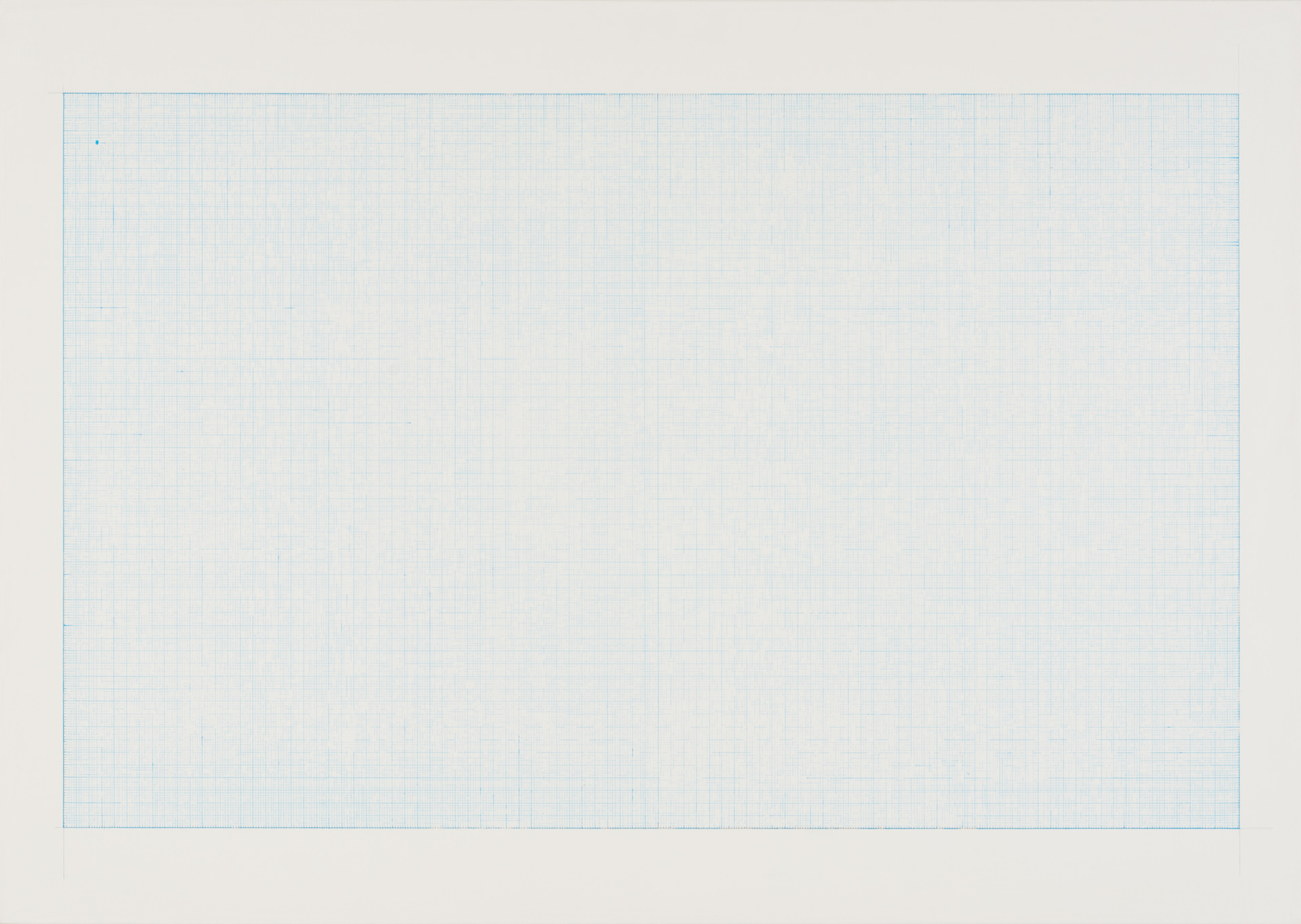
Inoue’s “attachment to diligence” is driven by a compulsive feeling of “must do,” yet she is always lacking the “what.” To drive the subject and predicate without an object, she establishes a place where “I do,” namely setting the “graph paper” as the site where “I do.”
Meanwhile, Miura’s “resistance to laziness” forcefully gives “purpose” in resistance to the “laziness” that everyone possesses—the constant desire not to do. The “purpose” here is not inherent to Miura. Just as “what” is absent from the beginning for Inoue, here too it is absent. Precisely because it is “absent,” a provisional purpose—”random numbers”—is given, and he serves it.
Writing it this way might sound like I’m negating both of them, but that’s not the case at all. Rather, I myself am aware of both “attachment to diligence” and “resistance to laziness,” and I think many people are positioned somewhere on the gradient between these. Or rather, one could say that resistance to laziness is itself attachment to diligence, and in the end, aren’t they the same thing? In fact, when tasked with writing this text, I was honestly “…” and my hand wouldn’t move at all due to my own “laziness,” but somehow I pushed back with a “Come on!” and now I’m diligently writing this… back to the point.
It’s not that “content” always precedes and contains “what,” with “form” existing to express it. Yet the expression created by the “absence” of “what” for these two is not the pure extraction of form alone as formalism aims for.
Rather, isn’t it that form alone emerges afterward precisely because they expressed the “content” of “what being absent”? And isn’t this a manifestation of a passive formalism, different from formalism that actively discards “what”?
However, I do not understand the term “passive form” as something negative. Rather, I believe it is in this passivity that the potential of these two artists lies.
In other words, I dreamed of the possibility that instead of orthodox academic development of formalism, they could develop an alternative form that takes as its “content” the state of contemporary humanity and the world that “cannot possess what”—as its content.
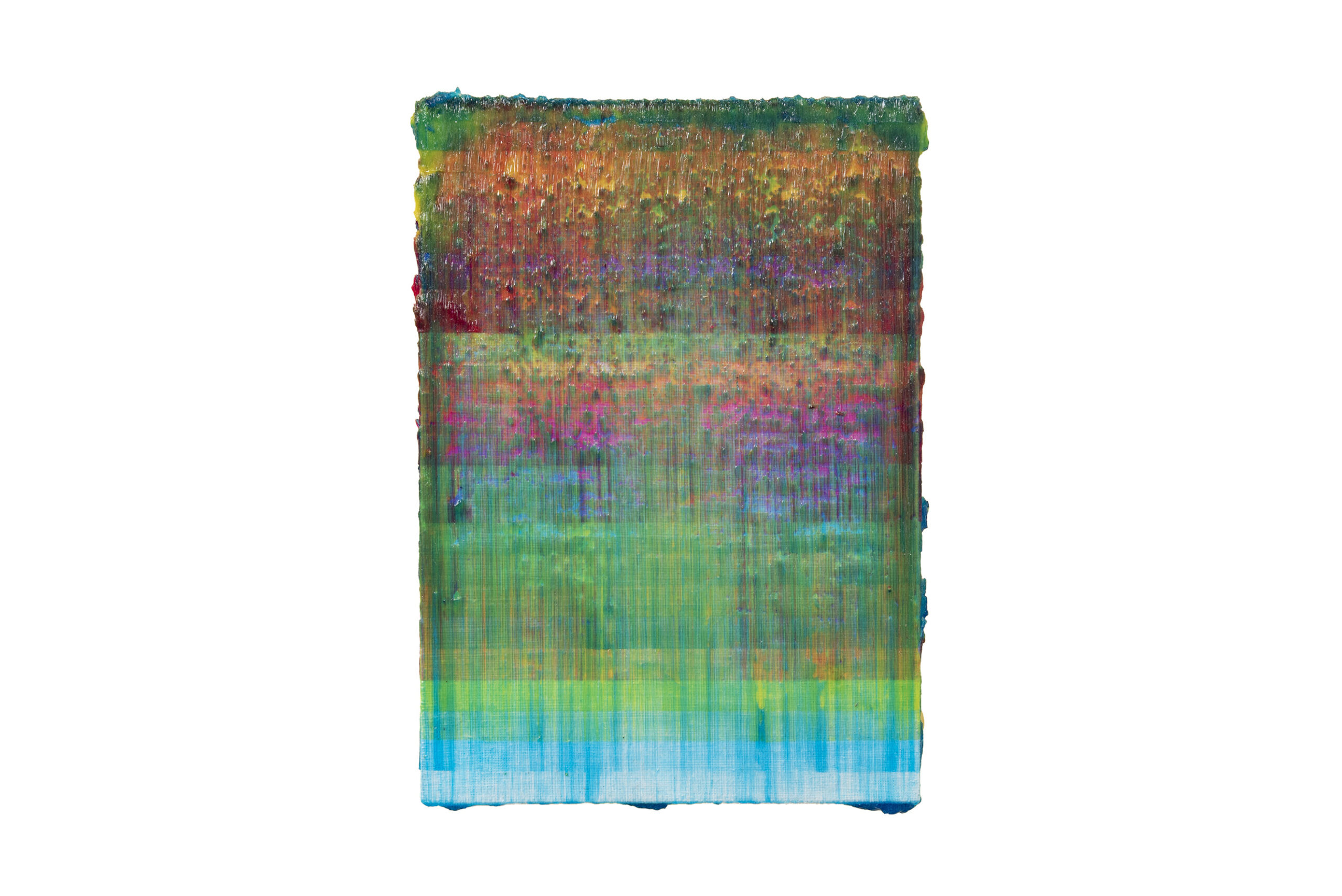
Creates mainly two-dimensional works with themes of “chance, randomness, the boundary between handwork and mechanical work, and labor.” The method of composing images based on instructions from random numbers eliminates hesitation that arises during the creation process, reflecting unconscious and pure action. Just as mechanically drawn lines acquire their own unique expression, he creates works to re-examine mundane everyday life.
-Biography-
Born in Tokyo in 1997
2021: “2020 Kyoto University of Art and Design Completion Exhibition” (Kyoto University of Art and Design)
“exhibition from shu” (Y gion)
2020: “WEB SPURT 2020” (Kyoto University of Art and Design Web Magazine ‘Uryū Newsletter’)
“COLORS” (Kobe Motomachi Poporin-dō Gallery)
“HOTEL ANTEROOM NAHA” Permanent Exhibition (Hotel Anteroom Naha)
“Shell Art Award 2020” (National Art Center)
“Shibuya Style Vol.14” (Seibu Department Store Shibuya)
2019: “2018 Kyoto University of Arts Graduation Exhibition” (Kyoto University of Arts)
“HOP 2019” (Kyoto University of Arts)
“OPEN STUDIO” (Kyoto University of Arts)
“EXHIBITION UNKNOWN EYES” (THE STORIES)
2016: “Nozoki” (gallery&)
Awards
Shell Art Award 2020 Selected
2020 Kyoto University of Art and Design Completion Exhibition Graduate School Award
Nanami Inoue
Repeats the act of drawing lines relentlessly, preserving traces such as line shifts and paint accumulation that emerge within this repeated action.
-Biography-
Born in Aichi Prefecture in 1996
2019: Graduated from Nagoya University of Arts, Faculty of Fine Arts, Department of Fine Arts, Western Painting Course 2
2021: Completed Kyoto University of Art and Design Graduate School, Master’s Program, Art and Craft Division, Oil Painting Field
2021:
“DAWN-EXPOSITION 2021.04-” Ginza Tsutaya Books GINZA ATRIUM / Tokyo
“2020 Kyoto University of Art and Design Graduate School Completion Exhibition” Kyoto University of Art and Design / Kyoto
2020:
“From The Youth at Higashiyama” Seishun Gallery / Kyoto
“S-2Ds” ex-chamber museum / Tokyo
“ARTISTS’ FAIR KYOTO 2020” Kyoto Prefectural Museum of Art / Kyoto
“ANTEROOM NAHA_Phase 2020” ANTEROOM Naha / Okinawa
2019:
“SWING~Reiwa 1st Year~Gallery Ohrin Selection Nanami Inoue・Ryosuke Saito・Rina Tanaka” Gallery Sakuralin (Hitachi Izumo Grand Shrine) / Ibaraki
“Nagoya University of Arts Graduation Exhibition” Nagoya University of Arts / Aichi
Awards
2021 “Kyoto University of Art and Design Graduate School Completion Exhibition” Excellence Award
2019 “Nagoya University of Arts Graduation Exhibition” Excellence Award Brighton University Award
시부야구 마츠노하 문화 스트릿에 위치한 현대미술 상업갤러리 biscuit gallery(시부야구 마츠노하)에서는 이번 봄에 교토예술대학 대학원을 수료한 2명의 미술작가, 미우라 코가와 이노우에 나나미에 의한 2인전 「perspective」를 개최합니다.
전시 기간은 2021년 7월 29일(목)부터 8월 8일(일)입니다.※8월 9일(월)까지 연장.
「무엇을」이 「없다」
이노우에 나나미, 미우라 코가의 두 사람은 각각 자신에게 규칙을 부과하여 회화를 제작하고 있습니다.
그 점은 공통되지만, 그 규칙 설정을 부과하게 된 이유는 다른 것 같습니다. 즉, 이노우에는 자신의 「근면함에 대한 집착」으로서, 미우라는 자신의 「게으름에 대한 저항」으로서, 각각 규칙을 부과함으로써 어떻게든 자신과 회화 제작을 연결하는 지점을 찾고 있는 것이 아닐까요.
이노우에의 「근면함에 대한 집착」은 항상 「해야만 한다」는 강박적인 생각에 시달리면서도, 항상 「무엇을」이 부족합니다. 목적어를 잃은 형태로 주어와 술어를 작동시키기 위해서는 「내가, 한다」는 장을 제공하는 것, 즉 「모눈종이」라는 장을 설정하고 「내가, 한다」입니다.
한편, 미우라의 「게으름에 대한 저항」은 항상 「하고 싶지 않다」는 누구나 가지고 있는 「게으름」에 대해 강제적으로 「목적」을 부여하고 저항합니다. 여기서 말하는 「목적」은 미우라에게 필연적이지 않습니다. 이노우에에게 있어서의 「무엇을」과 마찬가지로, 처음부터 「없습니다」. 「없기」 때문에 임시의 목적 「난수」가 부여되고, 그것에 봉사합니다.
이렇게 쓰면 두 사람을 부정하는 것처럼 들릴지도 모르지만, 별로 그렇지 않습니다. 오히려, 이렇게 「근면함에 대한 집착」과 「게으름에 대한 저항」은 저도 자각하고 있으며, 많은 사람들도 이 사이의 그래데이션 어딘가에 위치하고 있는 것이 아닐까, 라고 생각합니다. 아니면, 게으름에 대한 저항으로서 근면함에 집착하고 있다고도 할 수 있고, 결국 같은 것이 아닌가, 라고 생각하지 않지도 않습니다. 실제로, 이 텍스트를 쓰게 되어 정직하게 「・・・」 손이 좀처럼 움직이지 않는 자신의 「게으름」에 대해 어떻게든 「음!」이라고 저항하고, 현재 근면하게 이것을 쓰고 있는데요・・・ 이야기를 되돌리겠습니다.
항상 「무엇을」을 포함하는 「내용」이 먼저 앞서고, 그것을 표현하기 위해 「형식」이 있는 것이 아닙니다. 그렇다고 두 사람의 「무엇을」의 「없음」에 의한 표현이 포르말리즘이 지향하는 형식만의 순수한 추출도 아닙니다.
오히려, 「무엇을」이 「없다」는 「내용」을 표현했기 때문에 사후적으로 「형식」만이 떠오르는 것이 아닐까요. 그리고 이것은 「무엇을」을 적극적으로 버리는 포르말리즘과는 다른, 소극적인 형식의 발로가 아닐까요.
다만, 이 소극적인 형식이라는 말을 저는 부정적인 것으로 받아들이지 않습니다. 오히려 이 소극성에야말로 두 사람의 가능성이 있는 것이 아닐까, 라고 생각합니다.
즉, 정통 포르말리즘의 학문적인 발전이 아니라, 「무엇을, 을 가질 수 없는」현대의 인간의 있음새, 세계의 있음새를 「내용」으로 하는 오르터너티브한 형식을 발전시킬 수 있다면, , 라고 몽상했기 때문입니다.
「우연성・무작위성・수공 및 기계 작업의 경계・노동」을 주제로, 주로 평면 작품을 제작합니다. 난수에 의한 지시를 바탕으로 이미지를 만들어나가는 방법은, 제작 과정에서 발생하는 망설임을 제거하고, 무의식적이고 순수한 행위를 드러내기 위한 것입니다. 기계적으로 그려진 선에도 고유의 표정이 생기는 것처럼, 담담한 일상을 다시 바라보기 위해 제작합니다.
-약력-
1997년 도쿄도 출생
2021년 「2020년도 교토예술대학 수료전」(교토예술대학)
「exhibition from shu」(Y gion)
 biscuit gallery